|
Written by Ed Wenn
Back In The USSR
Joel is a good friend of mine. He owns a tasty little Russian plastic half-frame camera that takes 72 pictures on a 36 exposure roll of 35mm film. He uses it a lot with a coloured flash and gets some really fun results. It's perfect for documenting a drunken night out or for getting the whole of a long weekend onto one film. When I asked around about this type of camera it turned out that my mother-in-law used to have an Olympus Pen in the 1980's that also took 72 pictures on 35mm film. She loved it too. My curiosity was definitely aroused, but while the quirkiness and value for money of 72 snaps per roll appeals to me, the reality is that I'm too impatient. I like to get through a roll fairly quickly and waiting until I'd taken that many pictures would probably be too much for my sanity. I therefore decided against tracking one down and filed the thought away for a rainy day.
I Can See For Miles
Roll forward a few months and I'm introduced to the wonderful Ansco Pix Panorama; a camera which takes °panoramic format' photos by masking off the top and bottom of a normal 35mm film thus exposing a proportionally longer, thinner strip across the middle of the negative. I got hold of one and loved from the start the way the different aspect ratio forces you into taking a different kind of picture. At the same time however it bothered me that I was wasting all that film every time I took a picture. It somehow didn't seem right.
Blending In
So then I thought about pulling the half-frame and the pano ideas together. There's been a big focus on panoramic photography on the Toycamera.com forum recently and looking at my Holga one day I started thinking about masking off a strip at the top and bottom of the 6X6 frame to convert it into a °Pano Holga' along the lines of the Ansco, but with a bigger negative. I like big negatives; big negatives are a truly good thing in life. However it occurred to me that instead of wasting a load of film to create the panoramic aspect ratio I could mask off half of the whole frame in one go instead of a quarter each at the top and bottom and thus convert the Holga into a rudimentary half-frame camera. As a bonus I could then take 12 °panoramic' pictures, remove the film and wind it back, flip the 6X6 mask round the other way and take 12 more pictures. Some would work well on their own - as panoramas - and some would work well as a pair with the snap above or below. Either way it was worth trying„.right?
Incubation:
1. Take the back off your Holga and remove the 6X6 frame.
2. Using tape and some cardboard (as ever a film packet is pretty much perfect for a Holga-related mod) mask off slightly more than the top or bottom half of the frame. I chose to leave a deliberately rough edge in the expectation of an interesting border between the two exposures, but it's your call. Just try and make the tape top as smooth as possible to avoid scratching the film later on.

3. It's actually up to you to decide how much of the frame you want to mask off - i.e. how big you want the separating line to be in the middle of the top and bottom pictures. You could even get them to overlap slightly if you want. Whatever works best.

4. Re-insert the 6X6 frame - remembering which way up the mask is - and load your film normally.

5. Shoot the first 12 pictures taking extra special care to line up the number on the film backing with the centre of the red window. This isn't vital; it just makes the final result look slicker if you remember to centre the number similarly on your second run through.

6. If you've masked off the bottom half remember to frame things accordingly through the Holga's precision viewfinder - OK it's a crap-shoot to a certain extent, but you know what I mean.
7. You might also want to tape a picture of which way round the mask is to the top of the camera if you're not shooting all 12 shots in one session as you'll easily forget which way up you're shooting if you don't get it all done in one go.
8. When you've taken the 12th picture don't wind all the way on so the film comes off the spool, but instead wait until a convenient moment and pop the back off the Holga to remove the film (N.B. It goes without saying but this needs to be done in the dark - see below).
9. Rewind the film tightly onto the original (left-hand) spool. Try not to scratch it as you do this.
10. Once the film's been tightly rewound take the 6X6 frame out and turn it round so that the other half of the film is masked off.
11. Reload the camera.
12. Advance the film so that shot number 1 is centred in the red window and go have fun w/ the second 12 snaps.
13. Remember to frame the shots according to whether or not you've masked the top or bottom of the film and remember also to switch round your reminder picture if you decided to use one.
Walk Don't Run
The Viewfinder Problem - Even if you number yourself amongst those people who understand the magic relationship between the Holga's viewfinder and what you actually get on film, using it as a half-frame camera will be a challenge. I found it really difficult and I'm usually spot on w/ the Holga. When you start off leave lots of room for error and don't frame too closely. Alternatively, you could tape over half of the viewfinder window to at least give yourself a chance.
Different Light - I found out the hard way that it's best to take all 24 exposures in as similar light conditions as possible - preferably in one session - otherwise scanning/printing the negatives will be a complete nightmare without some expert burning in or out. If you take the first 12 on an overcast day and the second in bright sunlight it'll be hard to get any decent double-decker style moments and you'll have to keep everything separate. The biggest problem with this is where to change film after 12 exposures if you're °in the field'. A black bag is the obvious answer, but if you haven't got one of them or access to a nearby light tight room you'll have to take 12 snaps on one day, wind the film back at night and finish the film off the next time the light looks right.
The Good Part Of The Lens - Ironically, masking off a central strip to create the half-frame format often means masking off the one part of the Holga's lens that's more or less sharp. If you can live with that then fine, but be prepared for very soft, blurred photos.
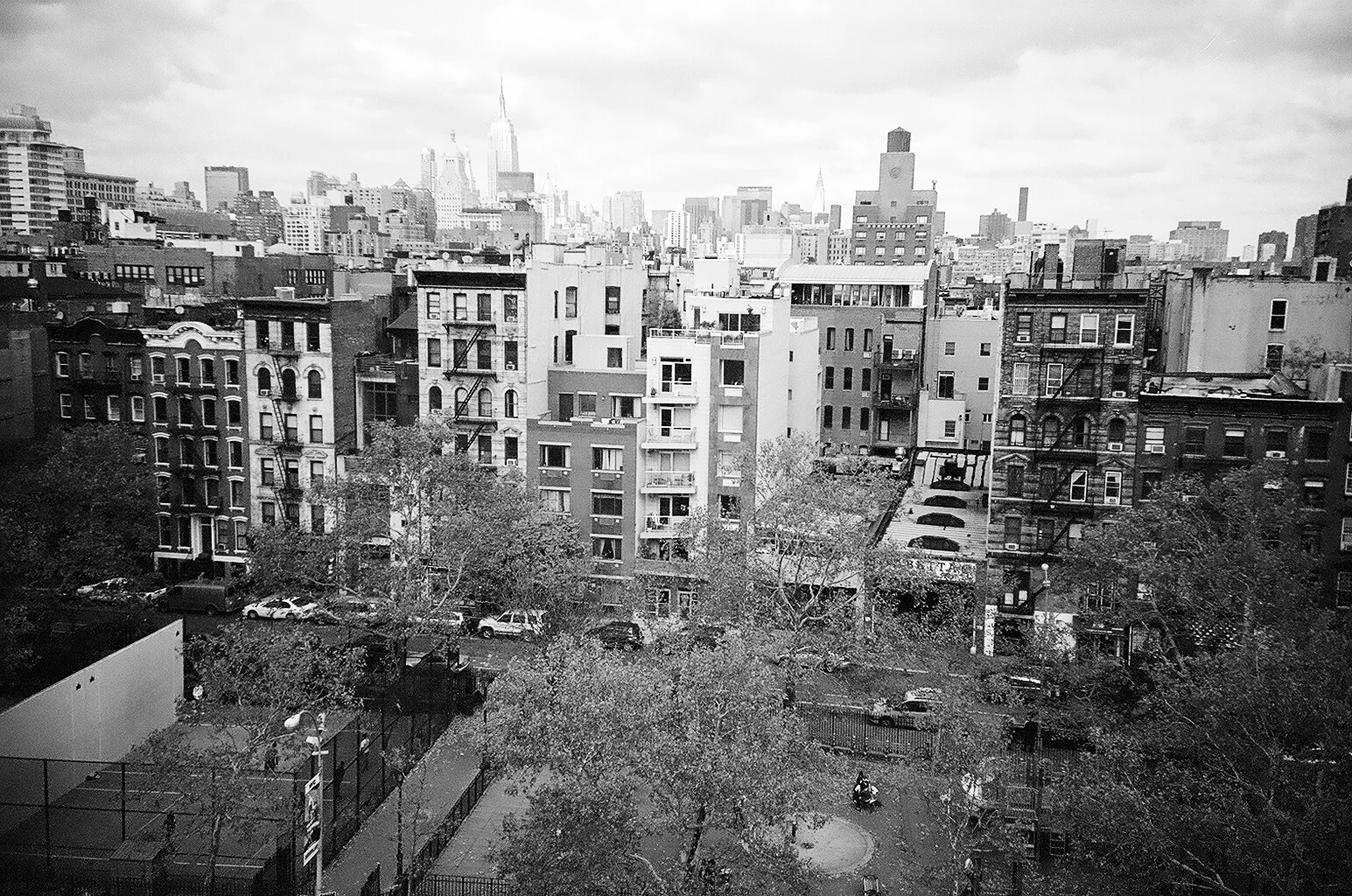
Post Production - I don't use a darkroom. I get my negs processed and then I do the rest with a scanner, Photoshop and my inkjet printer. As far as half-frame Holgas goes, this setup means I can rescue shots where I messed up and the lighting was very different between the two half-frame exposures (see above). You can scan the image in two halves and then re-assemble it afterwards with the light levels corrected. Yeah, it's sort of cheating, but every little helps. The second and final images on this page were constructed that way.
This Is The End
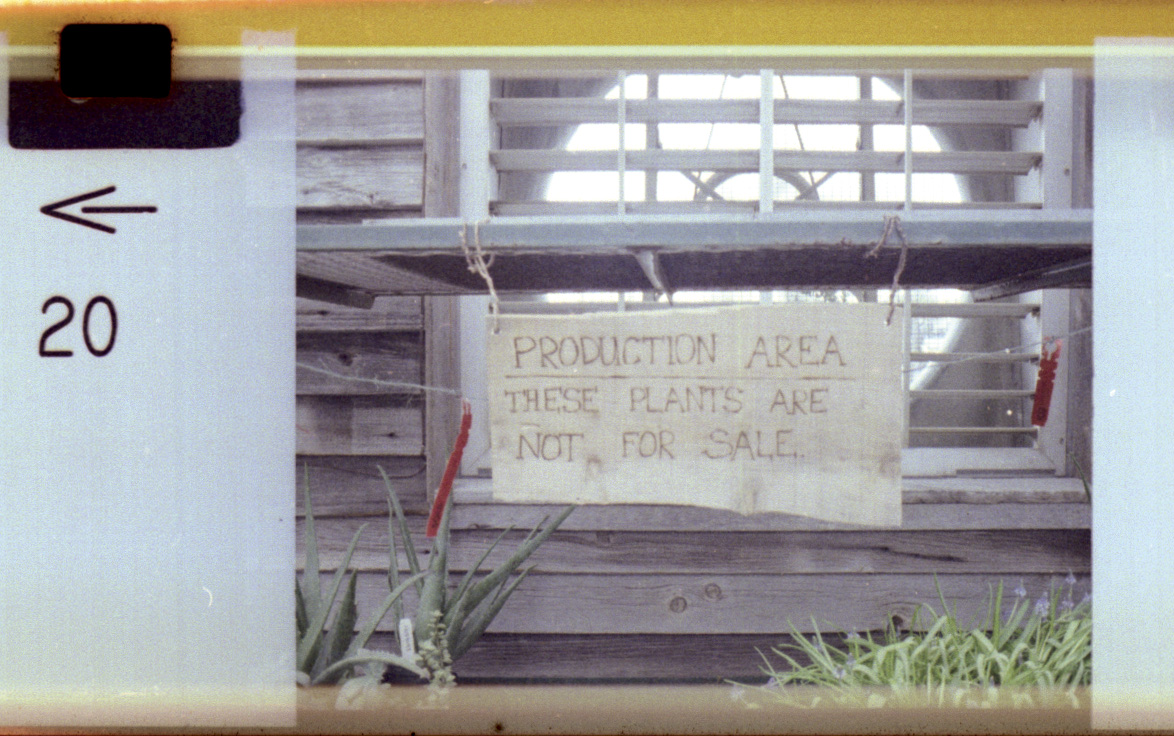
As you can see from the photos included in this article, I've not managed to take a decent °double-decker' shot yet - although some of them are getting close ÿ and the individual panos are harder to frame successfully using this method as opposed to just masking a bit off the top and bottom of the 6X6 mask, BUT it's a lot of fun shooting half-frames and it's a tonic for the jaded, experienced Holga user because you're suddenly right back to the good old days of genuinely not knowing what you're going to get out of a film.
[Section headings courtesy of The Beatles, The Who, Government Issue, Joy Division, The Ventures & The Doors]
|