ToyCamera Blog

Update on the ‘Play’ toycamera book!

Posted by Nic Nichols on Nov 30, 2011 in Blog, Home Page Gallery | 60 comments

Update on the ‘Play’ toycamera book!

Composing with Images Press is very excited to release the cover of Play! A Collection of Toy Camera Photographs, edited by Jody Shipka with Nic Nichols…

It is truly an international effort. 100% of proceeds will go to the Marine Tots for Tots Foundation. Release date: the weekend of December 2, 2011 on Blurb’s Blurb for Good online bookstore.

The cover features “Selah” by Lori Bell.

The book will include:

  • 63 photographs and reflections
  • taken on 30 different toy and homemade cameras
  • by 36 photographers
  • from 12 countries
  • on 5 continents.

More info on the Composing with Images Press Website


Review : The Konica Wai-Wai

Posted by Brian Cartwright on Sep 22, 2011 in Blog, Home Page Gallery | 68 comments

Review : The Konica Wai-Wai

It’s tough not to examine any toy camera today in the context of Lomography. As practiced toy shooters pick up a camera not just because they want to but because it is the right tool for the job. What the lens can do, the eccentricities of the build and the history of the equipment all mean something god damn it. A Holga is a Holga for a REASON. No matter what you call the Ultra Wide & Slim it is still the Ultra Wide & Slim.

And so we examine the Konica Wai Wai in the post LC-W world. Like so many, I knew what the LC-W was going to be before it was released. Once it arrived I scratched my head and thought “What the shit?” A clumsily hashed together camera it did many things poorly at once. It’s use of a mask for half frame functionality recalled the caustic failure of the Diana Mini. LSI still has not released a fun half frame shooter. The curved of the Krab casing in every LC-W shot reminded users that Lomo had released the camera without reverse compatibility to LC-A accessories in mind. The LC-W instant kit cemented that. And finally the viewfinder. Look, we shoot toy cameras. An eccentric viewfinder is often part of the relationship but the LC-W’s viewfinder is the byproduct of rushing hurriedly through the design process. Sloppy.

So the Wai Wai. I’d been hunting one for a while. Since before the LC-W release. The arm length self-portraits and pictures of shoes that now populated Lomo’s catalogue of 17mm wide images made me want to get behind the lens of the Konica Wai Wai. The departure of Konica Minolta from the camera and film game and the original disposable function of the camera have prevented this little shooter from ascending to the same lofty pedestal as the Ultra Wide & Slim and that’s a shame. And here’s the part where every modern toy camera review is conextualized in a Lomo world. The Konica Wai Wai is everything the LC-W is not.

Accounting for inflation the price of the Wai Wai is $11.75 in 2011 dollars. The LC-W is $389. Let that sink in. Even at $50 the Wai Wai is still a great deal because despite it’s unfortunate designation as disposable it is anything but. I found it’s build sturdy and resiliant and I am on my fifth reloading of the camera. There are cameras that are intended to be reloaded like the Jazz 207 and Walgreens Free Film For Life Camera that even after one or two uses I found almost spongy to the touch. Not cut out for a long life of plucky shooting.

One of the first design features that caught my eye with the Wai Wai was the loop for the wrist strap. It’s like some friendly, knowing engineer knew this product was too good and that camera nerds would be unable to turn over this 17mm soft plastic lens to some uncaring photomat goon. A loop for a wrist strap doesn’t say “Use this camera to document one boring birthday party.” It says “It’s adventure time baby.”

Once you’ve actually got the thing in the field shooting with it is a pleasure because the aforementioned awesome engineers designed an extra wide body with finger guards that prevent rogue forefingers in photos. I love my UWS but I can’t tell you how many times I have been shooting with speed in mind and caught a finger in frame. The Wai Wai frees up the toy shooter to go fast and wide because the design will corral your fingers out of the way. Simple and pleasing ergonomics. The way LSI spoke to rogue fingers on their most recent addition to the wide fray, La Sardina, is adding needless moving parts. I’ll take Wai Wai’s finger bumper any day.

After you realize you ain’t photographing your finger the question arises ‘What am I shooting?’ With a shutter speed of 1/100th of a second and an aperture of f8 the answer is “a lot” with C41 films. C41 process is already forgiving and the speed and aperture of the Wai Wai will allow you a lot of latitude. I’d suggest sticking Ilford XP1 or XP2 in this little baby. It treats the film well and the C41 process of the film really supports the Wai Wai’s “no harm, no foul” middle ground settings.

But if 400 speed black and white ain’t your thing some of Kodak’s recently recalibrated Portra 800 will give you handsome results. The camera was originally shipped with a roll of Konica’s crappy consumer grade ISO800 film and so feeding it some nice fast color film will net you great results.

The viewfinder is pleasingly accurate and parallax only seems to become a major concern within 2 feet. You will know with some level of accuracy what you are shooting when you look through the finder. If you are the kind of guy who is driven take pictures of himself at arm’s length the camera does have a built in mirror which offers a more than passable level of accuracy.

So what do the pictures look like? One a bright day or with the flash (yes kids, there’s a flash and it isn’t external and connected by a hokey proprietary prong) you will get supersaturated color or nice rich blacks. The center of the frame can get tack sharp but the edges give away to that friendly toy camera fuzziness that highlights the nature of the lens. One thing I found impressive was the 30cm focal distance. You can definitely get inside of one foot and shoot dramatic and intense portraits of a subject while coloring a lush world around them. Coupled with the sharpness of the center of the frame and the focus drop-off around edges adds a dreamlike quality to the pictures. But lot like the slurped cough-syrup fugue of the Holga. This is an overcaffinated, fast rush of a dream. Like a Baz Luhrmann movie.

If you are the type of shooter who’s gun shy on doing any serious modding or prodding to his cams the Youube videos of people reloading Wai Wais in broad daylight might intimidate you. FIRST insert the screwdriver. THEN insert the sliced up credit card. FINALLY stand on one foot. Here’s my radical suggestion. Just buy a damn dark bag. Changing rolls with this thing in a dark bag goes very fast and is much easier than the bizarre juju ritual of the daylight change. And let’s face it. You probably already have one from when you unload your Holga with 135 film.

So what’s my suggestion in a post LC-W world? Shell out 400 hundred bucks for the LC-W or hunt all over the damn internet for a disposable camera that rivals a unicorn for rarity? Hunt that unicorn true believers. The Konica Wai Wai real McCoy and well worth what you spend on it.


Featured Photographer : Kengyi Kwek

Posted by Nic Nichols on Aug 16, 2011 in Blog, Home Page Gallery | 14 comments

Featured Photographer : Kengyi Kwek

I am a fifteen year old student from Singapore (in School, you can see her uniform) I’ve played with film ever since unearthing an old point-and-shoot Canon in one of my parents’ many drawers, but it wasn’t until I discovered Holgas that I truly began to love doing so. Fittingly, all of the pictures I’ve submitted were taken with a Holga – the 135BC.

The black and white photographs were shot in a cemetery on an important date in the Chinese calendar; 清明节 or the Tomb Sweeping Festival. On this day, crowds swarm cemeteries to give the graves of their loved ones a good sprucing up, hence the name. Sombre as it sounds, people usually treat it as a holiday and some actually turn it into a money-making opportunity (Ice Cream!)
Surviving depicts a pair of karang gunis. These rag-and-bone workers are a common sight in Singapore where they go about houses to purchase old newspapers and unwanted electrical goods before selling them to recycling companies for a meagre profit. What is unique about these two, is that they are a couple. It was heartwarming to see them work together in comfortable silence.
Lastly, Vandals shows two of my friends. The title of this picture is a joke as they definitely weren’t vandalising the postbox but rather, participating in a competition meant to build up hype for the upcoming Youth Olympic games. I personally like the double exposure here as it seems like my friend’s soul is evaporating from her body.

‘Cemetery Lane’

‘Graves’

‘Ice Cream’

‘School’

‘Surviving’

‘Vandals’


Play : At The Carnival

Posted by Nic Nichols on Jul 17, 2011 in Blog, Home Page Gallery | 40 comments

Play : At The Carnival

In the spirit of the book of playful images that is currently taking submissions, we thought it would be fitting to show some ‘playful’ photographs. Jody Shipka and Nic Nichols will be two of the book’s editors, and here are their takes on a Carnival through the lens of a Toy Camera. Remember to check out the call for entries, and be sure to get yours in soon! The book benefits a great charity, and will help many of those in need.

From Nic Nichols…

From Jody Shipka…


Featured Photographer : Bill Wolff

Posted by Nic Nichols on Jul 6, 2011 in Blog, Featured Artist, Home Page Gallery | 54 comments

Featured Photographer : Bill Wolff

For this week’s featured photographer, we thought it would be great to feature the work of Bill Wolff. For those of you submitting to the CWIP Toys for Tots book, he is the founder of Composing with Images Press. Besides being a Professor of Writing Arts, he is also a fantastic photographer. Have a look at some of these beautiful images, and for more, see his website.

Bill Wolff is an assistant professor of Writing Arts at Rowan University. He teaches visual rhetoric, web design, and information architecture. After using digital for some time, he’s switched back to film so he can use his Holgas, Diana F+, and Golden Half. He just purchased a Polaroid 250 on eBay.


Afternoon in Baja : Diana F+

One (Cafe du Monde) : Holga 120S

Poncho’s Mom : Diana F+

Tendrils of the Tide : Golden Half

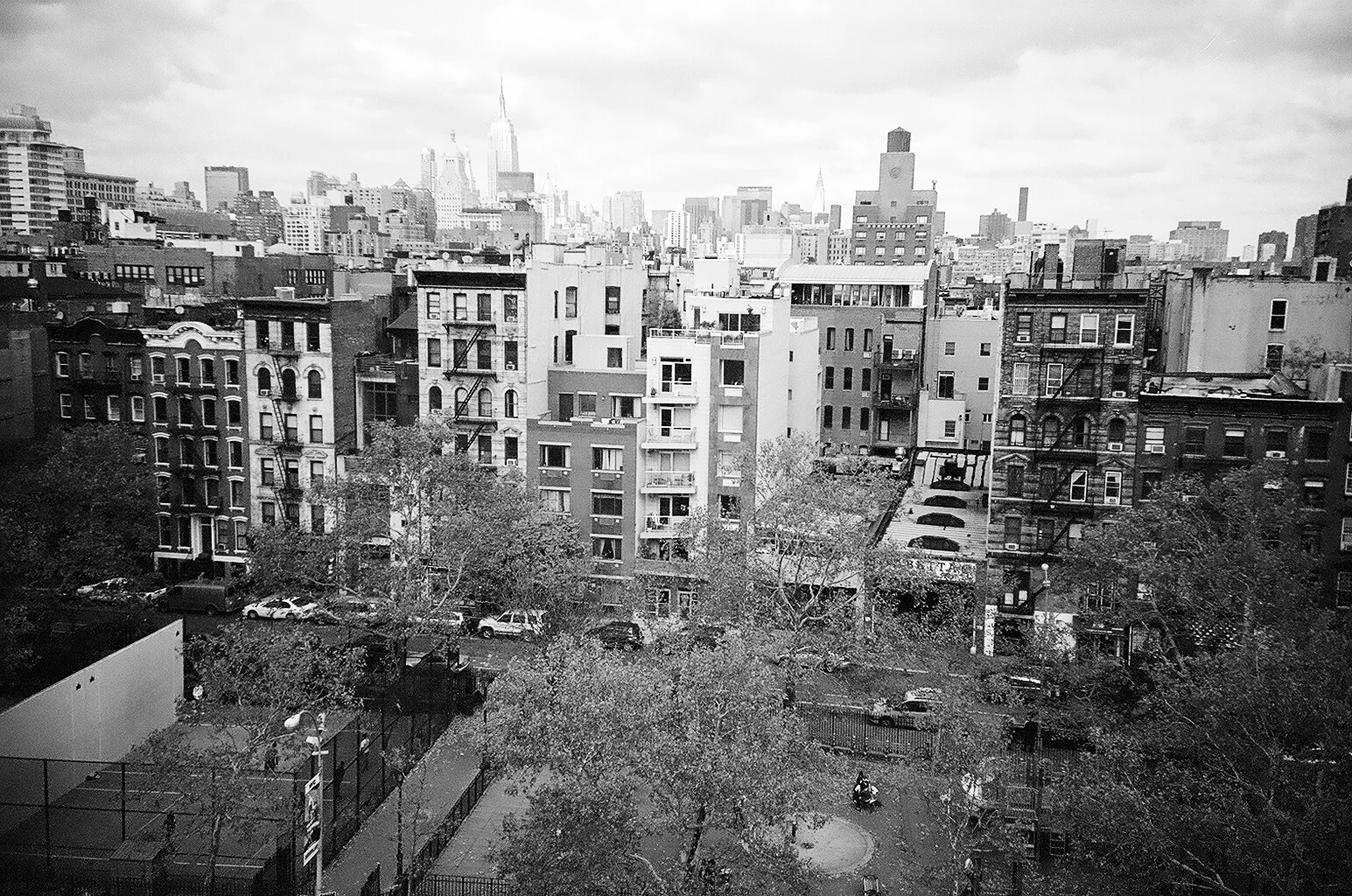
The Lowest East Side : Holga 120S

What We’re Wearing  : Holga 120S

First look at the Lomo La Sardina

Posted by Gary M on Jun 28, 2011 in Blog | 44 comments

First look at the Lomo La Sardina

La Sardina 35mm Cameras

  • Manufacturer: Lomography
  • Date: Current
  • Format: 35mm film
  • Price: $59-99
  • Summary: Plastic wide angle lens camera

Technical Details:

  • Aperture fixed F8
  • Shutter speed 1/100 and bulb
  • Lens 21mm

Attributes:

  • Some edge blurring
  • Slight vignette
  • Lens flare

Field Notes: Lomography is at it again and takes some old camera styling cues to make a modern day toy camera. The La Sardina camera is loosely based on the Kandor Candid camera made in the 1950‘s by the Irwin Corp. Although the muse for this new camera used 127 film, the Sardina uses readily available 35mm film. The original camera was said to resemble an old sardine can. Lomo uses this to their advantage and has designed some catchy looking graphics in homage to those old fishy tin cans.

What you do get besides a slick looking camera, is one that is actually very usable and solid feeling. The viewfinder is tiny but usable to get you in the ball park when composing. What really makes it worth while is the 22mm lens. It’s really great for landscapes, group shots, etc. If your into multi exposures, you can adjust the shutter to MX. You also get N and B settings also. N=1/100th second and B=bulb. The shutter button is conveniently threaded to attach a cable release and of course there is a tripod socket. Lomo also makes a special flash attachment for this camera.

You can buy it as a package deal with the camera for $99.00 or separately. A normal hot shoe flash will not work on this model. The front lens assembly collapses for storage by a slight twist of the barrel. The shutter will not work when the lens is turned in. Film loading and rewinding is pretty straight forward with the dual knob setup. Negative sizes are typical 35mm film 36mm x 24mm. This makes for no hassle film processing at your local labs.  I think Lomo did a nice job on this camera. The only thing I would have added was some mounting lugs for a strap. Currently you have 4 different (artwork) models to choose from.

C. Gary Moyer


A Holga in China : Ernie Button

Posted by Nic Nichols on Jun 26, 2011 in Blog, Home Page Gallery | 6 comments

A Holga in China : Ernie Button

One of the best ways that ToyCamera.com can share amazing images from around the world is through reader submissions. We want to see your images, and we’re sure that all of our readers do as well. Last week we received an email from Ernie Button, and after a look at his website we knew you would be amazed. Traveling back to China, the birthplace of the Holga, Ernie captured his ‘Monumental China’ series. Once you’ve enjoyed the images below, take a trip to his website to see some more great work, to read more about the Monumental China series, read the Artist Statement here… and now a few words from Ernie himself.

For over 35 years, Phoenix, Arizona has been my home.  For much of my adult life, photography has provided me a forum to communicate my past & present, my humor & concerns,  my observations & explorations.  Although my subject matter varies, my images tend to focus on the individual nature of objects (and occasionally people) and the unique qualities that each possesses.  My images often attempt to provide a voice to objects that are ignored and are frequently overlooked or taken for granted.

I was introduced to the Holga in a photography class that I was taking at a local community college.  I ordered one but really didn’t start using it until I stopped taking classes and just started shooting for the love of making images.  I didn’t know how the Holga was going to fit into my way of making photographs because the images I was making up to that point tended to be more constructed and shot in the studio, relying on the sharpness of my conventional cameras to help drive the image.  Over the years, the Holga has become an important part of my images as well as my identity as a photographer, influencing my studio work and pushing me to embrace the blur.

For the past decade, I have taken my Holgas wherever I travel (or quite frankly, whenever I go outside).  The image that the Holga produces reminds me of the memory of travel.  Portions of the image are sharp and in-focus and other portions of the image are blurred.  For me, that mirrors trying to remember everything that happened on a trip.  There are portions of a trip that are crystal clear and sharp in my memory (i.e. in-focus) where as other aspects of the trip may be a little more difficult to remember (out-of-focus).

Ernie Button


Featured Photographer : Marc Jones

Posted by Nic Nichols on Jun 17, 2011 in Blog, Featured Artist, Home Page Gallery | 8 comments

Featured Photographer : Marc Jones

‘My name is Marc Jones. I live in Tokyo but I am originally from England. I studied film at university and that was so not really useful for life but useful for hobbies. I used to snap Polaroids at university but since then I went to disposables. When cheap digital hit, I jumped but I got sick of the terrible colour so picked up some film cameras. I tend to take photographs with my Smena 8M or my Vivitar UWS. I’ve had a Vivitar shot featured on Pictory, and I keep a photoblog at http://lightplaystricks.wordpress.com All shots were taken with the Smena 8M except ‘Shimmer’ and ‘Rocket’ which were with a Vivitar UWS.’


“It gives me a sense of enormous wellbeing”

“Kawagoe Business Hotel”

“Cat Cafe”

“This City That City”

“Shimmer”

“Rocket”

and this week…

Posted by Nic Nichols on Jun 7, 2011 in Blog, Home Page News | 0 comments

In the blog, Brian Cartwright takes on the Konica Wai-Wai to see what all the Hype is about…

Street photography + Meetups. Photowalks around the world, workshops and seminars. We’re looking to put a few together, and need your help. Do you want to host a photo walk in your home town? The crew here have a few workshops and walks that we think you’ll love coming in early Fall. Contact us today for more info, and let us know where you are located. We’d be happy to help sponsor the get togethers with film + assorted goodies…


In the blog are Words of Wisdom from Tread and Valery Rizzo, both great reads. A great DIY Diana Hack, and some Iconic Images from our readers. If you would like to submit to any of the features, just shoot us an email.

We are also building the Social Networking side of ToyCamera.com, so head over to Facebook and ‘Like’ us to get news + info streamed right to your Facebook account. Follow us on Twitter as well, and you will be notified when new things are popping up.

ToyCamera.com was created for Toy Camera lovers like you to converse, share ideas and show what you’ve created with your Analog goodies, so please feel free to send in anything that you would like to share with others in the Blog section, or post in the Forum.

The Mijonju Show : Make your own camera case!

Words of Wisdom : Valery Rizzo

Posted by Nic Nichols on Jun 7, 2011 in Blog, Featured Artist, Home Page Gallery | 1,275 comments

Words of Wisdom : Valery Rizzo
We first saw Valery’s work in Nona Brooklyn’s Urban Farms and Gardens feature, and were pleasantly surprised to see the images for the piece were shot with a Holga. After contacting her and viewing more of her work, we realized we had found an amazing example of Toy Camera work being viable in the modern photojournalistic markets. We all love our Holgas, but most of us use them to create fine art images. Valery shows us that the demand for true analog photography still not only exists, but is quite in demand. She shares her story exclusively for ToyCamera.com readers. Enjoy, and be sure to check the links below to see more of her work. 
I’m a professional stock, assignment and fine art photographer from Brooklyn New York. I have been shooting with plastic or toy cameras for five years now. It all began one day when I woke up with vertigo, which left me debilitated and unable to even walk up the street. If there is something you never wish to experience in your lifetime I can tell you vertigo is definitely one of them, I did not start to feel like myself until about four years later. But through that horrible time I actually discovered who I was as a photographer together with a Holga camera. During that time my husband would take me for drives to get me out of the house and one of the first places he took me was Coney Island for some fresh air and see the ocean.
To get myself back into shooting I took a Holga and some film with me, which seemed light and simple enough to start being creative and working again. One of my first few rolls of film produced what I call my signature image of two pin-up girls on the beach at Coney Island, which generated the idea for my Brooklyn book project, all shot with plastic cameras. I hope to have it published as my first monograph when the work is finished in the next year or so. This year some images from my project were featured in the PDN’s PHOTOBOOK NYC book, which was designed by Elizabeth Avedon.
Although I shoot most of my stock and assignment work digitally, I have always received attention not from that work but instead from my Brooklyn toy camera work. A few years ago I started submitting Holga shots together with my digital images to my stock agencies and they started excepting them. I even started getting calls from buyers who wanted to license again my Holga work. So I just kept shooting this way and working on my personal Brooklyn work.
This year I started a food photography blog called Eating Brooklyn and although the food photography is shot digitally, once in a while I shoot stories about restaurants or places in Brooklyn and throw in a Holga shot or two. From that I got hired to shoot a photo story with my Holga every month for another Brooklyn website called Nona Brooklynwhich is a resource for Brooklynites looking to discover local, artisanal and sustainably-produced food in Brooklyn. The first photo story featured was about urban farms and gardens and the second was about the food vendors at the Brooklyn flea and both were entirely shot with Holgas. I was excited about the challenge of actually shooting an assignment which was heavily based on portraiture and shooting it successfully with toy cameras. I have to admit the challenging part has been shooting with film and a Holga versus what the job pays, so for this month’s story I am doing a combination of digital shooting together with Holga which fits the model of how I shoot for my blog.

To see more of Valery’s work and links associated with this article:

My food photography blog :  Eating Brooklyn
My photographer’s blog : To follow My work
PDN PHOTOBOOKNYC on Elizabeth Avedon’s blog